Monitoring Country

Feral cattle

Cattle are a domesticated animal that are usually kept as livestock for meat or dairy products. In some parts of Australia, there are large populations of feral Cattle that are not cared for or owned by people.
Cattle are a threat to healthy Country
Cattle can harm Country if they aren’t managed properly because their behaviour can be destructive, including grazing and trampling native vegetation and wallowing in and trampling waterways leading to:
- Soil compaction and erosion
- Spread of weeds
- Habitat loss
- Water pollution and changed water flows
- Changed fire regimes
These impacts can have flow-on effects for native vegetation and wildlife, leading to a decline in biodiversity.
Managing cattle
Good Cattle management includes protecting important areas like waterways and native vegetation with fencing, destocking or population control of herds, removing weeds and replanting native vegetation.
Aerial shooting and mustering are the main control methods for feral Cattle. Fencing is expensive to install and maintain and therefore is rarely used on large, pastoral properties.
Where Cattle live
Species Records
Use the + - Zoom controls to select an area
Cattle were brought to Australia by early European colonisers, and cattle ranches were established from the 1960s onwards. Now, 43% of Australia’s land is used in beef production. Overtime, Cattle have escaped into the wild and established feral herds, particularly in northern Australia.
Habitat
Cattle are found on agricultural lands, including pastoral lands with remnant native vegetation, and in native environments across Australia. In northern Australia, Cattle are found in tropical savannah habitats. Both domestic and feral herds are usually found nearby water including wetlands, creeks, and artificial watering points.
What Cattle look like
Cattle are large, four-legged animals with hooves. They can range in colour from white, black or brown, with or without spots. Some breeds have large, curved horns. They have large, rounded hooves that leave deep imprints in the soil.

Cattle (Bos taurus). Credit: Denis Bin, CC-BY-ND-2.0.
REMEMBER! Any time you do work that might disturb or interfere with native animals and vegetation, particularly threatened species, you need to check with the state authorities to see if you need any approvals, such as scientific licences or animal ethics committee permits.
You can monitor Feral Cattle to better understand:
- Where Feral Cattle are and aren’t on Country
- How many Feral Cattle live on Country
- How well management of Country and Feral Cattle is working
By using one or more of the following methods, you can better understand Feral Cattle on your Country. If you monitor the same place at the same time every year, you can see if there are changes to Feral Cattle on Country.
2 Ha Plot: Tracks, Scats, Diggings & Signs Survey
A good way to monitor Feral Cattle is by searching 2 ha areas for all signs of Cattle, including tracks and scats. The survey is used to find signs of lots of different animals, not just Feral Cattle. This survey doesn’t need specialised equipment but it is useful to have some tracking skills.
What can you learn?
- Presence/absence – if and where Feral Cattle live on Country
- Occupancy - If enough plots surveyed, the presence/absence data can be used to estimate occupancy. This type of modelling helps to work how many places really have Feral Cattle, even if they weren’t detected at every plot. This can be used as an indicator of how large the population might be and if is getting smaller/bigger over time.
- Activity - how many signs of Feral Cattle were detected during the survey. This can be used as an indicator of how large the population might be.
Using it the Right-way
You can learn more about the 2 Ha Plot: Tracks, Scats, Diggings & Signs Survey on the “How we check on things” page and in the Environmental Monitoring Method 2 Ha Plot: Tracks, Scats, Diggings & Signs Survey.
Remote Camera Survey
Remote cameras can be set up to take photos whenever an animal passes in front of the camera. This method is useful for Feral Cattle because it means you don’t have to search for them. The survey is used to detect lots of different animals, not just Feral Cattle.
What can you learn?
- Presence/absence – if and where Feral Cattle live on Country \
- Occupancy - If enough cameras are deployed at different sites, the presence/absence data can be used to estimate occupancy. This type of modelling helps to work how many places really have Feral Cattle, even if they weren’t detected on every camera. This can be used as an indicator of how large the population might be and if is getting smaller/bigger over time.
- Activity - how many detections of Feral Cattle during the survey. This can be used as an indicator of how large the population might be.
Using it the Right-way
If you are only interested in Cattle, then cameras should be deployed nearby waterways and in areas where there are signs of Feral Cattle (e.g. cow pats, tracks, damaged vegetation).
You can learn more about camera traps on the “How we check on things” page and in the Environmental Monitoring Method Landscape Scale Camera Trap Monitoring.
Aerial Surveys
This is a method where a helicopter or small aircraft is flown over a large area of Country to look for Feral Cattle. You can use this method to monitor how many Feral Cattle there are and where they are living on Country.
Any time you do work that might disturb or interfere with native animals and vegetation, particularly threatened species, you need to check with the state authorities to see if you need any approvals, such as scientific licences or animal ethics committee permits.
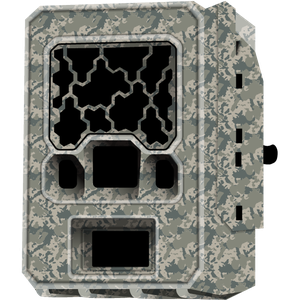

This is a method where cameras are placed out on Country and left to record any animals that move past the camera. The camera can be lured (usually with food like peanut butter, sardines or chicken) to encourage an animal to visit the camera. If a species is detected on camera, its presence is recorded. This method doesn’t focus only on Feral Cattle, as the presence of all species is usually recorded.
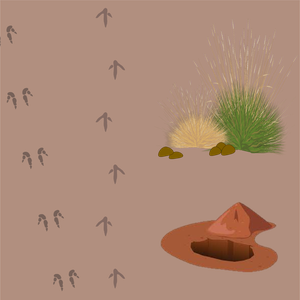
This is a method where trackers search a 2 Ha area for all signs of animals, including tracks, scats, diggings and other signs. If signs of a species are found in a plot, its presence is recorded. This method doesn’t focus only on Feral Cattle, as the presence of all species is recorded.
Primary sources
This landing page was developed using the following sources:
Primary sources
This landing page was developed using the following sources:
- Mihailou, H., Massaro, M. (2021). An overview of the impacts of feral cattle, water buffalo and pigs on the savannas, wetlands and biota of northern Australia. Austral Ecology 46: 699-712. https://onlinelibrary.wiley.com/doi/full/10.1111/aec.13046
- Meat and Livestock Australia (2023). Fast Facts: Australia’s beef industry. https://www.mla.com.au/globalassets/mla-corporate/prices--markets/documents/trends--analysis/fast-facts--maps/mla_beef-fast-facts-2023_300523.pdf
- CSIRO (2024). Tracking feral animals with sensor technology. https://www.csiro.au/en/research/indigenous-science/managing-country/tracking
- Northern Territory Government (2024). Feral cattle. https://nt.gov.au/environment/animals/feral-animals/feral-cattle
Tools and resources
- Learn how AI and space technology can help with managing feral herds: https://vimeo.com/603491130
- Codes for humane capture, handling and destruction of feral animals in Australia: https://www.dcceew.gov.au/environment/invasive-species/publications/model-codes-practice-feral-animals