Monitoring Country

Feral goats
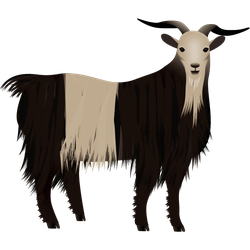
Goats are usually a domesticated animal, but there are also large populations of feral goats in Australia that are not cared for or owned by people. Goats were used in the 1800s for meat, milk, and furs, however from the 1920s were released into the wild as industries collapsed and other options became available. There are now thought to be 2 to 5 million feral goats in Australia.
Feral Goats are a threat to healthy Country
Feral goats can harm Country because they foul waterholes and graze and browse on a wide variety of native vegetation, leading to:
- Decline in native plant health from overgrazing
- Poor seedling regeneration
- Soil erosion
- Spread of weeds
- Water pollution
Particularly during droughts, feral goats can degrade native animals habitats like important breeding areas for Malleefowl (Leipoa ocellata) and compete for food resources and shelter with native animal species like Yellow-Footed Rock Wallabies (Petrogale xanthopus).
Feral goats are listed as a declared pest in Western Australia, South Australia, Victoria, New South Wales, and Canberra, and as a restricted invasive animal in Queensland.
‘Competition and land degradation by feral goats’ is identified as one of the key threatening processes to native species under the Environmental Protection and Biodiversity Conservation Act. There is a national Threat Abatement Plan for competition and land degradation by unmanaged Goats.
Managing goats
Total eradication of feral goats is not currently possible because of how widespread and well-adapted they are to Australia. Best practice management of feral goats should aim to reduce the impact on Australia’s biodiversity. Control methods for feral goats include:
- Mustering for commercial sale
- Aerial shooting
- Trapping at water points
- Local eradication from islands or fenced areas
- Judas goats
| Aboriginal Name | Language Group |
|---|---|
| Nhaniguurr | Gamilaraay/Gamilaroi/Kamilaroi/Yuwaalayaay/Yuwaalaraay |
| Wirribula | Gamilaraay/Gamilaroi/Kamilaroi |
| Wirrigaali | Yuwaalayaay |
Species Records
Use the + - Zoom controls to select an area
Where they are
Feral goats look like domestic goats. They can have a large range of coat colours and patterns, usually white, brown, or black combinations, which are often regional. They can have different horn and ear shapes, and different body sizes, depending on the breed they came from. Key features include:
- Two horns (usually), backward or sideward curving
- Coarse fur, short or shaggy
- Upright, tufted, short tail
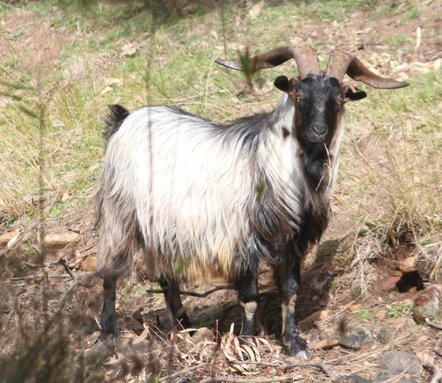
Feral goat. Credit: Misima Burns.
Tracks
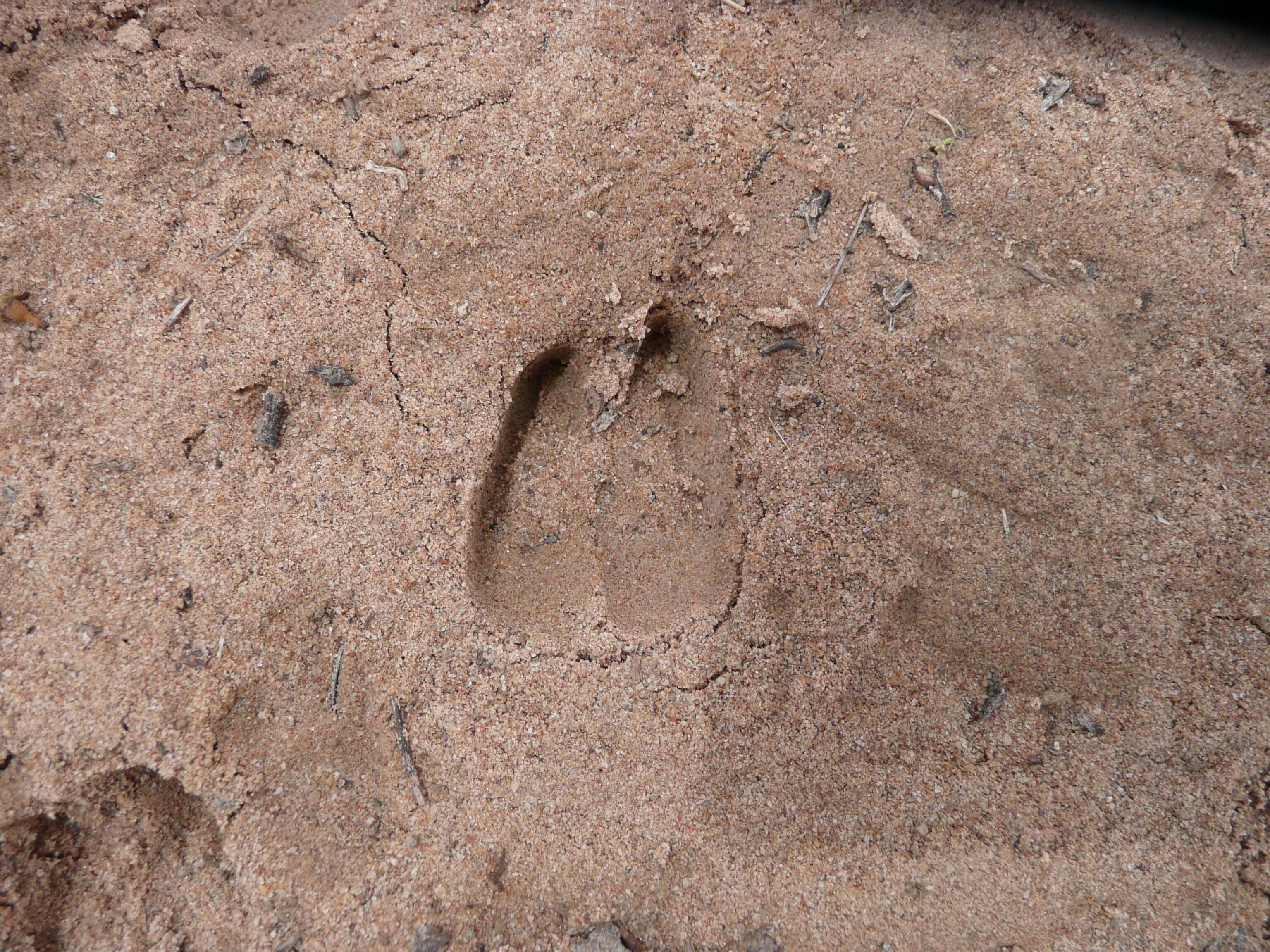
Goat track. Credit: Agriculture Victoria.
Scats
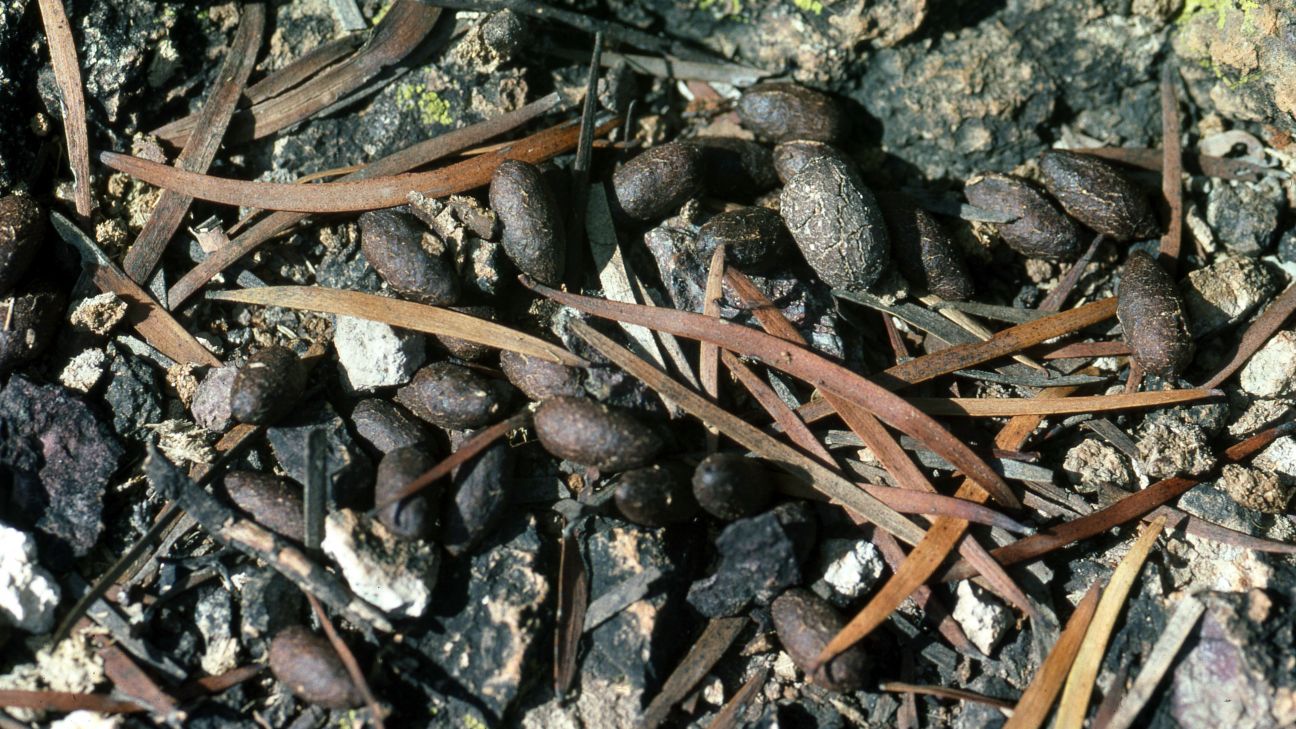
Goat scat. Credit: Department of Environment, Tourism, Science and Innovation
- where feral goats do and don't live
- how many feral goats live on your Country
- how well management of Country and feral goats is working
If you monitor the same place at the same time every year, you can see if there are changes to feral goats on Country.
Any time you do work that might disturb or interfere with native animals and vegetation, particularly threatened species, you need to check with the state authorities to see if you need any approvals, such as scientific licences or animal ethics committee permits.

- Where feral goats live:
- Occupancy – the proportion of sites occupied by a species.
- Changes over time – are species being detected at the same sites every year, or are they disappearing from some and/or appearing at other sites?
- Habitat preferences – does the species only occur in particular habitats?
- Detection frequency – how often are they being detected in an area?
- Behaviour – what are they doing in the photos?
- Activity – you can know when they are active or passing through areas. This can also be used as an indicator of how large the population might be.
- You can collect data from seeing feral goats in an image. You might be able to identify their age, sex, group size, health (skinny or fat) etc.
- Population size – if feral goats detected on cameras can be individually identified, the information can be used in a capture-recapture analysis to estimate how many feral goats live on Country.
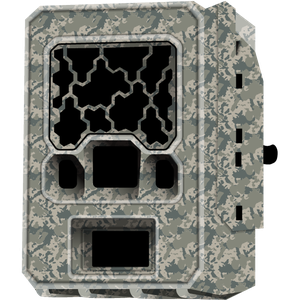
Camera traps can be used to monitor feral goats on Country. They can be set to automatically take photos or videos when an animal passes the camera. You can make your monitoring more efficient and cost effective by monitoring multiple species (including native and introduced species) with this method.
You will need to buy good quality remote cameras, but not much training is needed for deploying cameras or identifying species in the images. Images can also be processed first with the use of artificial intelligence (AI) tools, which can be useful when you have large numbers of images.
Camera traps are one of the best ways to monitor feral goats, because they are easy to identify from photos and you can cover a lot of area and different habitats, and because feral goats can be difficult to monitor with other methods. You can specifically put cameras in areas that feral goats like best, like rocky and hilly Country, and near water bodies, to increase your chances of detecting them.
When planning to do a camera survey:
- Feral goats use lots of different habitat types, so make sure the cameras are spread across all of the different major habitat types found on Country. If possible, have replicates in each habitat type.
- Use cameras in areas suitable for camera trapping i.e. open enough to take photos, or along trails, good access
- Avoid putting cameras in areas prone to flooding or becoming seasonally inaccessible, or make sure you collect cameras before it becomes inaccessible
- Feral goats can be active at all times of day.
- If there is an obvious path or area that feral goats use, you can set up cameras to face this path. Angle the camera down the path, so that you increase the amount of time the camera has to take pictures as feral goats pass by.
- Feral goats have a medium-sized body, so should easily trigger the camera sensors. You can use the standard camera trapping set up (height of 30 - 40 cm from ground) to monitor them.
- Place cameras at least 1 to 2 km apart.
Whenever possible, proof image classifications (including images with “nothing” in them), especially when using AI.
- Presence/absence - if and where feral goats live on Country
- Occupancy - if enough plots are surveyed, the presence/absence data can be used to estimate occupancy. This type of modelling helps to work how many areas really have feral goats, even if they weren’t detected at every plot. This can be used as an indicator of how large the population might be and if is getting smaller/bigger over time.
- Activity - how many signs of feral goats were detected during the survey. This can be used as an indicator of how large the population might be.
- Population size – if enough fresh scat can be collected and sent off for genetic analysis, the information can be used in a capture-recapture analysis to estimate how many feral goats live on Country.
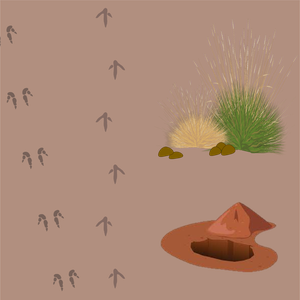
2 Ha Plot Surveys can be used to monitor feral goats on Country. This is a method where trackers search a 2 Hectare (Ha) area for all signs of animals, including tracks, scats, diggings and other signs. If signs of a species are found in a plot, its presence is recorded. This method doesn’t usually focus on a single species as you can often record signs of many species. This survey doesn’t need specialised equipment, but it is useful to have some tracking skills, particularly when trying to identify challenging signs like diggings.
2 Ha Plot Surveys can be a good way to monitor feral goats but only if you are on sandy Country, or soils that will show their tracks, or if you can find and confidently identify their scats, which can be difficult.
When planning to do a 2 Ha Plot Survey:
- Feral goat tracks can be difficult to tell apart from sheep, deer, and pig tracks, and sometimes kangaroo tracks. Make sure you can tell these tracks apart by using reference guides, and take photos of all tracks if you need help identifying them.
- Feral goat scat can be difficult to tell apart from sheep, deer, rabbits, and kangaroos. Make sure you can tell these tracks apart by using reference guides, and take photos of all tracks if you need help identifying them.
- 2 Ha Plot Surveys are most suitable for sandy Country, where tracks will easily show up
Primary sources
This landing page was developed using the following sources:
-
Threatened Species Recovery Hub (2021). Arid Zone Monitoring Species Profile: Goat. Project 3.2.5 findings factsheet. NESP. https://www.nespthreatenedspecies.edu.au/media/abhledhr/azm_species-profile_goat_v1.pdf
-
Department of the Environment and Energy (2008). Threat abatement plan for competition and land degradation by unmanaged goats. Commonwealth of Australia. https://www.dcceew.gov.au/environment/biodiversity/threatened/publications/tap/competition-and-land-degradation-unmanaged-goats
-
Sharp, T. (2012.) National Code of Practice for the humane control of feral goats. https://pestsmart.org.au/toolkit-resource/code-of-practice-feral-goats
Tools and resources
-
Codes for humane capture, handling and destruction of feral animals in Australia: https://www.dcceew.gov.au/environment/invasive-species/publications/model-codes-practice-feral-animals
-
Record Feral Goat sightings and control activities on the FeralGoatScan app: https://www.feralscan.org.au/feralgoatscan/default.aspx