Monitoring Country

Carnaby’s black cockatoo
 Endangered

Carnaby’s Black-Cockatoo are one of the five species of Black Cockatoos in Australia. They are large, social birds that live in flocks. They have distinctive black feathers with white panels, and powerful beaks that they use to crack nuts and seeds. Carnaby’s Black-Cockatoo are only found in south-west Western Australia.
Conservation status
- National –Endangered
- WA - Endangered
There is a recovery plan for Carnaby’s Black-Cockatoo.
Where Carnaby’s Black-Cockatoo live
Species Records
Use the + - Zoom controls to select an area
Carnaby’s are only found in south-western Western Australia. They are most found on the coastal plains during the non-breeding season, and in the Wheatbelt during the breeding season.
They have been lost from about a third of their breeding range.
Habitat
They are found in Eucalypt forests dominated by Jarrah, Marri and Karri species, shrublands dominated by Hakea, Banksia and Grevillea species, Kwongan heath, and pine plantations.
During the breeding season, they are only found in Eucalypt woodlands in the Wheatbelt. They need old trees, with large hollows, often Salmon Gum or Wandoo, that are nearby foraging habitat.
Where they sleep
Carnaby’s roost in tall native trees like large Eucalypts or introduced trees like pine trees, in or nearby food and water sources.
Where they eat
They forage for food in Banksia woodlands and heath, Marri forest, Kwongan shrublands, pine plantations, canola crop fields and nut orchards.
What Carnaby’s Black-Cockatoos look like
Carnaby’s Black-Cockatoo are large, black cockatoos that look similar to Baudin’s Black-Cockatoos. They have a very large bill that is shorter than Baudin’s Black-Cockatoos. They have a black body with thin white edges on the feathers, white patches on the cheeks and broad white panels on the tail.
Males have a pink eye ring, a black bill and dark grey legs and feet. Females have a grey eye ring and lighter coloured bills, legs and feet.
What Carnaby’s Black-Cockatoos sound like
Black cockatoo calls can be used to identify which species is in the area. Carnaby’s Black-Cockatoo make a loud, “wy-lah” call.
What Carnaby’s Black-Cockatoos eat
They mostly eat seed and nectar of native Eucalypt, Hakea, Banksia and Grevillea species. They will also eat seeds from pine cones, seeds and flowers from canola, and nuts from orchards.
Like other black cockatoos, Carmany’s Black-Cockatoo leave behind chewed Marri nuts on the ground. The chew marks on the nuts can be used to identify which black cockatoo species was feeding on the Marri.
Threats
Like other black cockatoos, the main threats to Carnaby’s Black-Cockatoos are largely to do with loss and degradation of important habitats, including for foraging, breeding and roosting. Nest hollow shortages from lost habitat and competition from other species is also a major issue.
Some of the key threats to the Carnaby’s Black-Cockatoo include:
- Unhealthy Country or lost habitat caused by:
- Land clearing
- Wrong-way fire
- Livestock
- Weeds
- Competition for nest hollows from native (possums, other birds) and non-native species (feral honeybees)
- Climate change
REMEMBER! Any time you do work that might disturb or interfere with native animals and vegetation, particularly threatened species (like Carnaby’s Black-Cockatoo), you need to check with the state authorities to see if you need any approvals, such as scientific licences or animal ethics committee permits.
You can monitor Carnaby’s Black-Cockatoos to better understand:
- Where they do and don’t live
- How many live on Country
- How well management of Country and threats to Carnaby’s Black-Cockatoos, and interventions to help Carnaby’s Black-Cockatoos (e.g. artificial nest hollows, revegetation) are working
By using one or more the following methods, you can better understand Carnaby’s Black-Cockatoos on your Country. If you monitor the same place at the same time every year, you can see if there are changes to Carnaby’s Black-Cockatoos on Country.
Any time you do work that might disturb or interfere with native animals and vegetation, particularly threatened species, you need to check with the state authorities to see if you need any approvals, such as scientific licences or animal ethics committee permits.
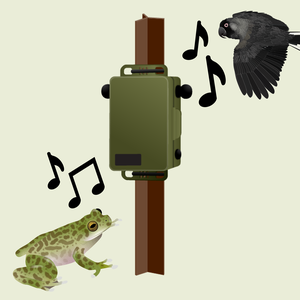

- Less stress for animals: Animals often change their behaviour when people are around.
- Hear what we miss: ARUs can record all day and night, recording sounds made by animals that don’t call much or those that call when we're not around.
- Do the time for you: ARUs …
Primary sources
This landing page was developing using the following sources:
Primary sources
This landing page was developing using the following sources:
IUCN Red List (2025) Carnaby’s Black-Cockatoo
Department of Parks and Wildlife (2013) Carnaby’s Cockatoo (Calyptorhynchus latirostris) Recovery Plan
BirdLife Australia (2025) Carnaby’s Black-Cockatoo
WWF-Australia/DCCEEW (2024) Threatened Species Day Fact Sheet: Carnaby’s Cockatoo - Calyptorhynchus latirostris